What Is an AI Agent for Business? The Explanation You Actually Need (No Jargon)
 By Tal Shmini
The Phrase Everyone Uses, and Nobody Defines
In consultation calls, I hear the phrase "AI agent" in almost every meeting, and every time it means something slightly different. One person means a WhatsApp bot that replies to customers. Another means ChatGPT, which they already use to draft emails. A third heard the term at a conference, was impressed, and doesn't quite remember what was actually being discussed.
That's not on you. The industry threw the term onto the market without properly explaining it, and every vendor uses it a bit differently, mostly so their product sounds more advanced. The problem for you as a business owner: if you don't know exactly what it means, it's hard to decide whether it's worth investing in, and even harder to tell whether whoever is pitching you an "AI agent" is actually building the thing they claim to be building.
So let's start from the beginning, no jargon.
What Is an AI Agent for Business, Really? The Plain Definition
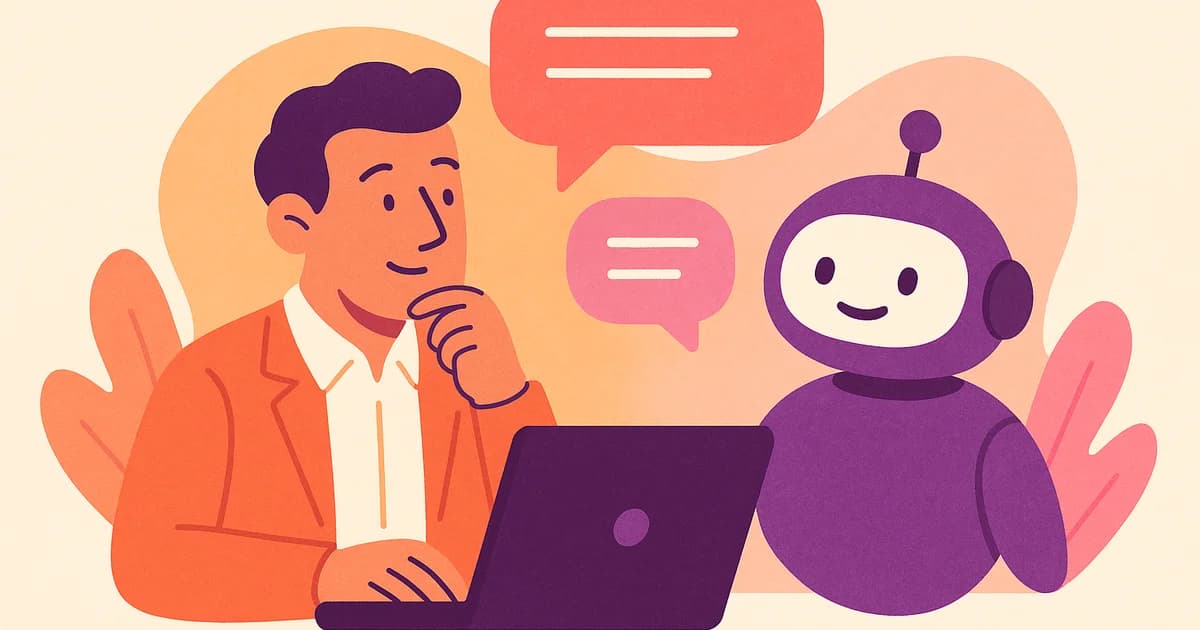
An AI agent is software that receives a goal and carries out the steps to reach it on its own, including making decisions along the way and acting inside the systems your business already runs on (WhatsApp, your calendar, your CRM, email). That's the core difference from a regular chatbot: a regular chatbot replies. An AI agent acts.
A short example makes this clearer than any definition: a new lead messages on WhatsApp, "How much does service X cost and when are you available?" An old-style bot would spot a keyword and return a generic canned reply, and if the question is phrased a little differently, it simply gets stuck. An AI agent understands the question in natural language, figures out what's actually relevant to this specific inquiry, replies with a tailored answer, asks a sensible follow-up question, and if the lead is a good fit, offers an open slot on the calendar directly and logs them in the CRM. All without a human touching it, and without the customer feeling like they're "talking to a menu."
What's the Difference Between an AI Agent, a Regular Bot, and ChatGPT?
To make the definition fully clear, it's worth comparing the three terms that get confused the most in the conversations I have:
| Menu/keyword-based bot | ChatGPT (a regular chat) | AI agent for business | |
|---|---|---|---|
| How it responds | Fixed, pre-set rules | Natural language, inside the chat only | Natural language, connected to real systems |
| Acts inside your business systems | No | No, unless someone wires it in manually | Yes - calendar, CRM, WhatsApp, email |
| What happens in an unexpected scenario | Gets stuck, or auto-forwards to an agent | Answers, but doesn't know your business data | Recognizes the edge case and hands off to a human at the right moment |
| Needs to be rebuilt for every change | Yes, almost always | Not applicable - not connected to your business | Less so - updates through business rules, not code |
The most common confusion is between the middle column and the right one. ChatGPT is a great tool for drafting, research, and summarizing, but it doesn't "know" what's on your calendar, who your customers are, or the status of a specific lead. An AI agent for business is built exactly to bridge that gap: it uses similar language technology, but it's connected to your business's real data and processes.
Why This Actually Matters for Your Business Right Now
I see this pattern again and again in businesses growing faster than their ability to respond: the owner or the sales team replies to customers between meetings, in the evenings, on weekends, and whoever messages at an inconvenient hour just waits until someone is free. By then, they've usually already messaged two or three competitors, and sometimes gotten an answer from one of them first.
Lead-response research shows, again and again, that the gap between replying within minutes versus within hours has a major effect on whether a lead moves forward in the sales process at all, not necessarily whether they become a customer at that exact moment, but significantly more likely to reach the next call or meeting. That's exactly where an AI agent helps most: not by replacing your team, but by catching that first moment, the one where a potential customer is still on the fence and waiting for someone to respond.
Not sure if an AI agent fits your business, or if you need to sort out the basics first?
In a quick consultation, we'll figure out together which processes in your business are actually ready for an AI agent, and propose an exact plan - not sell you something you don't need.
5 Concrete Uses for an AI Agent in a Small or Mid-Sized Business
- Sorting and first response on WhatsApp or chat - quickly understanding what the inquirer needs, replying in natural language, and handing off to a human only when real judgment is required.
- Automatic meeting scheduling - offering open calendar slots, booking, sending reminders, and updating automatically when someone cancels.
- Ongoing customer service - answering repeat questions (order status, cancellation policy, business hours), with a smooth handoff to a human agent when the question goes off-script.
- Real-time CRM data entry - every conversation with a lead is logged automatically, including status and a summary, so no inquiry falls through the cracks.
- Following up on leads who went cold - a gentle reminder to leads who went quiet after the first inquiry, timed and worded so it doesn't feel like spam.
What these five uses have in common: they're all recurring, reasonably well-defined processes that happen many times a week, exactly the kind of process that's a good fit for automation in the first place.
When an AI Agent Is NOT the Right Answer
Honestly, not every business needs an AI agent, and not at every stage. If your sales or service process still changes every week, if you can't explain it step by step, or if your customer information is scattered across a spreadsheet, WhatsApp chats, and sticky notes, an AI agent will be built on a shaky foundation and will disappoint. In those cases, the first move is to sort out the process and the data, and only then add an AI layer on top.
How We Approach This at Toolip
A consultation with us doesn't start with "let's build you an AI agent." It starts with mapping: which inquiries and processes repeat in your business, how much time they take, and what's already defined well enough for an AI agent to handle correctly. Sometimes the answer is a full AI agent. Sometimes it's a smaller start, like a WhatsApp bot that answers the common questions and hands off the rest to a human. The goal is always a solution that fits the size and stage of your business, not the most impressive thing on paper.
Bottom Line
An AI agent for business isn't another buzzword. It's software that understands a request, makes a decision, and acts inside your business's systems, instead of just replying in a chat window. The difference from a regular bot is in the acting. The difference from ChatGPT is in the connection to your real data. And the difference between a business that benefits from this and one that ends up disappointed almost always comes down to which process they chose to start with.
How long does it currently take you to reply to a customer who messages at 10pm? Book a free consultation - we'll figure out together whether an AI agent fits your business, and if so, where it makes the most sense to start.
More articles on this topic

Related Services

Written by Tal Shmini
Founder of Toolip | Business Automation & AI
Want us to do this for you?
Let our experts handle the implementation while you focus on growing your business.